As an Amazon Associate, we earn from qualifying purchases. Some links may be affiliate links at no extra cost to you. Although our opinions are based on curated research, we haven't used these products. Articles generated with AI.


The 10 Best TPMS Sensors of 2026 – Expert Reviews & Buying Guide

Leading TPMS sensors in 2026 include the cost-effective CDWTPS 4-pack for GM vehicles, Denso’s reliable Toyota/Lexus sensors, and the versatile 433MHz option for Dodge/Chrysler/Jeep models. You’ll find pre-programmed options with 10-year battery life alongside programmable sensors that require professional installation. When selecting a TPMS sensor, consider vehicle compatibility, programming requirements, and temperature tolerances. Our detailed guide explores key features to help you make an informed choice.
Key Takeaways
- Denso and Schrader lead the market with their versatile TPMS sensors, offering broad vehicle compatibility and reliable performance.
- Pre-programmed sensors like CDWTPS provide cost-effective solutions with long battery life and simplified installation for specific vehicle brands.
- Professional programming capability is crucial when selecting TPMS sensors, as many require specialized tools and technical expertise.
- Temperature tolerance range (-40°C to 125°C) and battery longevity (5-10 years) are essential factors in TPMS sensor selection.
- OEM-quality sensors offer superior reliability despite higher costs, while aftermarket options provide significant savings with comparable performance.
CDWTPS TPMS Sensor 4-Pack for GM Vehicles (315MHZ)

CDWTPS TPMS Sensor GM 4-Pack, 315MHZ Tire Pressure Monitor System for Chevy Silverado GMC Buick...
- 【PREFECT REPLACEMENT】The tire pressure monitor system (TPMS) is Compatible with Buick、Cadillac、SAAB、Hummer、Chevy、GMC、Pontia、Saturn、Suzuki(see picture...
- 【OEM Part Number】Pre-programmed tpms sensors direct-Fit OE replacement sensor,Replacing OE numbers are...
- 【Professional Testing】Each TPMS is tested before leaving the factory to ensure trouble-free installation and performance. We provide a one-year warranty on our...
GM vehicle owners seeking reliable, cost-effective tire pressure monitoring will find the CDWTPS TPMS Sensor 4-Pack an attractive alternative to expensive dealership options. These pre-programmed sensors, compatible with Chevy, GMC, Buick, Cadillac, and other GM brands, directly replace OEM parts without requiring programming.
You’ll appreciate the long-lasting CR2032 battery, which functions effectively from -40°C to 125°C for up to 10 years. While users report satisfactory performance and easy installation, some have noted connectivity issues over time. For ideal results, consider professional installation and verify vehicle compatibility before purchase to avoid additional costs.
Best For: GM vehicle owners looking for affordable, pre-programmed TPMS sensors that offer direct OEM replacement without requiring specialized programming.
Pros:
- Significant cost savings compared to dealership prices while maintaining comparable functionality
- Pre-programmed design eliminates need for additional programming or setup
- Long-lasting battery life up to 10 years with wide temperature operation range
Cons:
- Some users report connectivity issues and corrosion problems over time
- Less reliable long-term performance compared to OEM sensors
- May require professional installation for optimal performance despite being advertised as plug-and-play
Denso TPMS Sensor for Toyota/Lexus (550-0103)
Sale


Denso Tire Pressure Monitoring System (TPMS) Sensor - 550-0103 (Fits Select Models and Years of...
- Immediate coverage for applications which cannot be programmed
- Sensors should be serviced with our First Time Fit components every time the tire is removed, in order to restore the vehicle to its original condition and ensure safe...
- Do-it-yourselfers: Although DENSO TPMS sensors are pre-programmed for your specific make and model, you may need to visit your trusted repair shop to complete the sensor...
Toyota and Lexus owners seeking reliable TPMS solutions will find the Denso 550-0103 sensor particularly well-suited for vehicles equipped with factory alloy wheels. This clamp-in sensor requires proper programming before installation, with a specific wake-up procedure that involves deflating tires below 20 psi and reinflating them to 33 psi.
You’ll need an Autel MaxiTPMS TS501 or TS601 tool to program the sensors and upload codes to your vehicle’s ECU, while TechStream software may be necessary to clear any warning lights. While installation requires technical expertise, these sensors deliver accurate pressure readings and have proven successful across various Toyota and Lexus models.
Best For: Toyota and Lexus owners with factory alloy wheels who need reliable TPMS sensors and have access to professional installation equipment and expertise.
Pros:
- High-quality sensors that provide accurate tire pressure readings
- Compatible with multiple Toyota and Lexus models
- Durable clamp-in design for secure installation
Cons:
- Requires professional programming tools and expertise for installation
- Complex wake-up procedure necessary before programming
- May have compatibility issues with certain Lexus models
433MHz TPMS Sensor for Dodge, Chrysler, and Jeep Vehicles

433MHz TPMS Sensor, Tire Pressure Monitoring System Sensor - Compatible for Dodge Dart/Durango, for...
- Vehicle Fitment - Compatible for Dodge Dart 2013-2016, for Dodge Durango 2016-2018, for Chrysler 200 2015-2017, for Chrysler Pacifica 2017-2019, for Jeep Renegade...
- [REPLACE PART NO.] 68105280AF. Prior to buying, please verify the make, model, and year of your vehicle.
- Function - Tire Pressure Monitoring System Sensor are made of alloy and abs plastic, manufactured according to production standards, durable, high hardness, not easy to...
Vehicle owners seeking a reliable TPMS sensor for select Dodge, Chrysler, and Jeep models will find the 433MHz sensor an ideal choice, combining durability with precise monitoring capabilities. Constructed from high-quality alloy and ABS plastic, this sensor delivers shockproof performance while meeting OE specifications for a direct replacement fit.
The sensor’s compatibility spans multiple years and models, including the Dodge Dart (2013-2016), Chrysler Pacifica (2017-2019), and Jeep Grand Cherokee (2016-2019). You’ll appreciate the straightforward installation process, though it is essential to recognize that computer matching is required for proper functionality. The manufacturer backs this sensor with a 365-day unlimited mileage guarantee, ensuring your investment is protected.
Best For: Vehicle owners of specific Dodge, Chrysler, and Jeep models from 2013-2019 who need a reliable, OEM-quality TPMS sensor replacement and don’t mind performing computer matching during installation.
Pros:
- High-quality construction with durable alloy and ABS plastic materials
- Wide compatibility across multiple vehicle models and years
- Backed by a comprehensive 365-day unlimited mileage guarantee
Cons:
- Requires professional computer matching for proper functionality
- Potential issues with sensor-to-valve stem attachment during installation
- May need additional tools or professional installation despite “easy fitting” claims
CDWTPS TPMS Sensors for GM Vehicles (4 Pack)
Sale

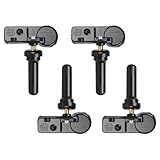
TPMS Sensor,GM 315Mhz Tire Pressure Monitoring Sensor Compatible for Chevy Silverado GMC Cadillac...
- PREFECT REPLACEMENT:The tire pressure monitor system (TPMS) is 100% Brand new Compatible with most GM branded vehicles manufactured after 2006.including GMC Chevy Buick...
- LONG LIFE:Battery is made to last up to 10 years of normal use,and can withstand 125 degrees high temperature
- NO SENSOR PROGRAMMING REQUIRED :The tire pressure monitor system (TPMS) come pre-programmed specifically for your make/model/year of vehicle,just need activate them with...
Drivers seeking a cost-effective TPMS solution for their General Motors vehicles will find exceptional value in the CDWTPS TPMS Sensors, which come pre-programmed and ready for installation as a complete set of four sensors. These high-quality sensors, compatible with most GM models manufactured after 2006, serve as direct replacements for multiple OEM part numbers while offering substantial cost savings compared to dealer prices.
You’ll appreciate the sensor’s durability, with batteries rated for up to 10 years and temperature resistance up to 125 degrees, though you’ll need a scan tool for activation. The sensors deliver reliable pressure readings and have demonstrated consistent performance through extended use, making them a practical choice for GM vehicle owners.
Best For: GM vehicle owners looking for reliable, cost-effective TPMS sensor replacements who want pre-programmed sensors that match OEM functionality without dealer pricing.
Pros:
- Significant cost savings compared to dealer prices while maintaining comparable quality
- Pre-programmed sensors require no initial programming and are compatible with most post-2006 GM vehicles
- Long-lasting battery life (up to 10 years) and high temperature resistance (up to 125 degrees)
Cons:
- Requires a scan tool for activation, which may need to be purchased separately or require professional service
- Some users report compatibility issues with specific GM models despite advertised fitment
- Professional installation might still be needed for proper sensor activation and programming
Marsflex TPMS Sensor for Toyota/Lexus/Scion (4 Pack)
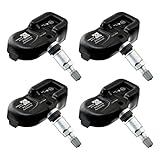
Marsflex TPMS Sensor 42607-33021 Compatible for Toyota Rav4 Camry 4Runner Tacoma Corolla, Lexus...
- Application: Compatible for Toyota 4 Runner/ Avalon/ Camry/ Corolla/ FJ Cruiser/ Highlander/ Land Cruiser/ Matrix/ Prius/ Prius V/ RAV4/ Sequoia/ Solara/ Tacoma/ Tundra...
- Replace Part Number: PMV-107J, 42607-06011, 42607-0C020, 42607-30030, 42607-33011, 42607-33021, 42607-35010
- Quality: Tire Pressure Sensors is Made of Premium Plastic and Metal Material, Sturdy, Not Easy to Aging and Abrasion Resistant, Same Process as OE to Ensure the...
The Marsflex TPMS sensor pack offers thorough coverage for an extensive range of popular Asian vehicles, making it an ideal choice for owners seeking reliable tire pressure monitoring across multiple makes and models.
Built with premium plastic and metal materials, these sensors follow OE manufacturing standards for durability and performance. While you’ll need to verify fitment using Amazon’s Part Finder and possibly program the sensors during installation, they’re designed to replace numerous OEM part numbers, including PMV-107J and 42607-series sensors. The one-year warranty provides some assurance, though you should plan to replace all sensors simultaneously for maximum system performance.
Best For: Toyota, Lexus, and Scion vehicle owners looking for a cost-effective TPMS sensor replacement solution that covers multiple vehicle models and years.
Pros:
- Wide compatibility across multiple Asian vehicle brands and models
- Premium construction with quality materials following OE manufacturing standards
- Comprehensive package includes 4 sensors with one-year warranty coverage
Cons:
- May require professional programming before use
- Mixed customer reviews regarding long-term reliability
- Some users report issues with customer service and warranty claims
Schrader EZ-Sensor Programmable TPMS Sensor (33500)
Sale


Schrader 33500 EZ-Sensor Single SKU (314.9 MHz, 315 MHz, and 433 MHz) Programmable Snap-in Fixed...
- Schrader Ez-Sensor Combines 314.9, 315, And 433 Mhz applications into one sensor, optimizing inventory levels and eliminating potential lost sales
- Ez-Sensor MUST be Programmed using a compatible tool, with the vehicle year, make and model protocol before installing the sensor into the wheel, and before the relearn...
- Once programmed, EZ-sensor performs identically to the OE replacement sensors and can be installed into the vehicle’s rim
Fleets managing multiple vehicle models will appreciate Schrader’s versatile EZ-Sensor (33500), which consolidates three different frequency applications into a single programmable TPMS sensor. This OEM-quality sensor requires professional programming with a compatible scan tool before installation, replicating original equipment functionality including auto-locate features.
You’ll need to verify that your installation shop has the correct programming equipment, as these sensors aren’t plug-and-play. While some users report successful self-installation after initial dealer programming, others have encountered activation challenges at tire shops, making it essential to confirm compatibility with your service provider beforehand.
Best For: Fleet managers and auto service centers handling multiple vehicle makes and models who need a versatile, programmable TPMS solution that can reduce inventory complexity.
Pros:
- Combines three frequencies (314.9 MHz, 315 MHz, 433 MHz) into one sensor, reducing inventory needs
- Matches OEM quality standards and functionality, including auto-locate technology
- More cost-effective compared to purchasing multiple sensor types
Cons:
- Requires professional programming before use – not a plug-and-play solution
- Installation success depends on shop having correct programming equipment
- Some users report difficulties with activation and potential compatibility issues at certain service locations
4PCS TPMS 433MHz Tire Pressure Monitoring System Sensors
Vehicle owners seeking a versatile and reliable tire monitoring solution will find the 4PCS TPMS 433MHz sensors particularly valuable, as they offer broad compatibility across multiple makes and models. You’ll appreciate that these sensors come pre-programmed, though you’ll need an OBD scan tool for pairing and re-learning after installation.
Built to OE standards and equipped with advanced smart chips, these sensors deliver accurate pressure readings even in challenging conditions. Clatoon’s decade of expertise shows in their professional testing process, ensuring durability and reliable performance. While most users report successful installations, you’ll want to verify your vehicle’s specific compatibility to avoid potential recognition issues.
Best For: Vehicle owners looking for reliable TPMS sensors with broad compatibility across multiple makes and models who want pre-programmed units that meet OE standards.
Pros:
- Pre-programmed sensors eliminate initial programming requirements
- Built to OE standards with high-tech smart chips for accurate readings
- Professionally tested for reliability in extreme conditions
Cons:
- Requires OBD scan tool for pairing and re-learning after installation
- Some vehicles may have compatibility issues despite matching part numbers
- Additional costs may be incurred if professional programming becomes necessary
Wireless Solar TPMS Tire Pressure Monitor System with External Sensors

Tire Pressure Monitoring System Upgrade Detached Bracket Wireless Solar TPMS Tire Pressure Monitor...
- Detachable Mounting Bracket: Tenpmas H11 tire pressure monitoring system monitor and mounting bracket are separated for flexible disassembly and easy setup changes and...
- 6 Alarm Types & Separate Setting Pressure Alarm Values: The only TPMS that supports different specifications for front and rear wheels, you can set different high and...
- 2/4 Wheel Mode: Unique upgraded new feature for 2024. H11 supports both 2-wheel mode (for small 2-wheel trailers) and 4-wheel mode (small 4-wheel vehicles). Switching to...
Modern drivers seeking an advanced tire monitoring solution will find extensive functionality in this wireless solar TPMS system, which combines real-time pressure tracking with flexible mounting options for cars, RVs, SUVs, and MPVs.
You’ll appreciate the system’s versatile features, including a detachable mounting bracket with USB charging capabilities, six distinct alarm types for thorough monitoring, and support for both 2-wheel and 4-wheel configurations at distances up to 19.7 feet. The 3.5-inch display offers three brightness levels for ideal visibility, while the automatic sleep mode with vibration monitoring guarantees efficient power management through both solar and USB charging options.
Best For: Vehicle owners seeking a comprehensive tire monitoring solution with flexible mounting options and dual power capabilities, particularly those with RVs, SUVs, or multi-vehicle needs.
Pros:
- Versatile power options combining solar charging and USB backup ensure continuous operation
- Flexible mounting system with adjustable viewing angles and easy installation process
- Comprehensive alarm system with six different types of alerts for thorough tire monitoring
Cons:
- Display visibility can be poor in direct sunlight despite brightness adjustment options
- Complex menu navigation and button functionality may be confusing for some users
- Customer service support requires order numbers and has been reported as slow to respond
MORESENSOR Signature Series TPMS Tire Pressure Sensors (4-Pack)
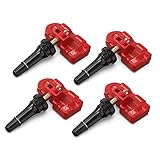
MORESENSOR Signature Series 315MHz TPMS Tire Pressure Sensor 4-Pack | Preprogrammed for Select...
- Relearn Ready : Our preprogrammed tire sensor comes ready to be paired to compatible vehicle, please use Amazon Part Finder to verify the fitment
- What is Relearn : All new sensors are required relearn procedure to pair with vehicle, please refer to your owner's manual for standard relearn instruction.
- Reprogrammable : Our preprogrammed sensor can be re-programmed or modify by ATEQ VT56 & Mobiletron PT46/47
American vehicle owners seeking reliable TPMS monitoring will find the MORESENSOR Signature Series particularly compelling, as these sensors come preprogrammed for compatibility with over 80 domestic vehicle models. With a snap-in design and 5-8 year battery life, these sensors offer a cost-effective alternative to expensive dealership options, typically saving hundreds on replacement costs.
While professional installation is recommended, you’ll need to complete a relearn procedure using devices like the ATEQ VT56 or follow your vehicle’s manual instructions, with local tire shops charging between $15-81 for installation and training. The 3-year warranty provides added peace of mind, though some users report initial syncing challenges that may require professional assistance.
Best For: American vehicle owners looking for affordable, long-lasting TPMS replacements who want significant savings compared to dealership pricing while maintaining reliable tire pressure monitoring.
Pros:
- Pre-programmed compatibility with 80+ American vehicle models saves time and reduces complexity
- Substantial cost savings compared to dealership options with similar performance
- Long battery life of 5-8 years with 3-year warranty coverage
Cons:
- Requires professional installation and relearn procedure for proper functionality
- Some users report initial syncing issues that may need expert troubleshooting
- Additional costs for installation and training may be required ($15-81 at local shops)
ROADFAR 315MHz TPMS Sensor for Chrysler/Dodge/Jeep/Ram

ROADFAR 315MHz Programmed Tire Pressure Monitoring System Sensor TPMS Fits for Chrysler for Dodge...
- FITMENT: 2011-2014 For Chrysler 200,2005-2007 For Chrysler 300,2007-2009 For Chrysler Aspen,2006-2008 For Chrysler Pacifica,2008-2010 For Chrysler PT Cruiser...
- FITMENT: 2008-2010 For Dodge Dakota,2007-2009 For Dodge Durango,2006-2007 For Dodge Grand Caravan,2005-2007 For Dodge Magnum,2007-2011 For Dodge Nitro,2008-2009 For Dodge...
- RELIABLE QUANTITY: This part is manufactured to exacting OE standards to ensure reliable performance and durability, it is constructed of good quality material, every...
The ROADFAR 315MHz TPMS sensor stands as an essential upgrade for owners of select Chrysler, Dodge, Jeep, and Ram vehicles manufactured between 2005 and 2017, offering a direct-fit replacement that requires no programming. You’ll find compatibility with numerous models, including the Chrysler 200, Dodge Ram 1500, and Jeep Compass, replacing over 20 different OEM part numbers.
The sensor’s installation follows a straightforward process using the lock/unlock button on your key fob, while its high-quality construction and premium chip guarantee reliable performance for up to 8 years. Though most users report successful installations, you might encounter occasional relearning challenges that may require professional assistance.
Best For: Vehicle owners of compatible Chrysler, Dodge, Jeep, and Ram models (2005-2017) seeking a reliable, no-programming-required TPMS sensor replacement.
Pros:
- Long battery life of up to 8 years with high-quality construction and premium components
- Wide compatibility across multiple vehicle models and replacement for 20+ OEM part numbers
- Simple DIY installation process using just the key fob, no special programming tools required
Cons:
- Some users report intermittent low tire pressure light issues even after installation
- May require professional assistance if relearning process becomes challenging
- Limited to specific vehicle models and years, not a universal solution
Factors to Consider When Choosing a Car Parts Factory Tire Sensor
When you’re selecting a factory tire pressure monitoring sensor, you’ll need to carefully evaluate several key technical specifications, including the programming requirements for your vehicle and make-specific compatibility. The sensor’s battery life expectancy, which typically ranges from 5-10 years, and installation complexity level will directly impact your long-term maintenance costs and initial setup experience. Your chosen TPMS sensor must also operate reliably within your region’s temperature extremes, with most quality sensors functioning between -40°F and 185°F for consistent performance throughout all seasons.
Sensor Programming Requirements
Selecting appropriate TPMS sensors requires careful consideration of programming requirements, as different models offer varying levels of setup complexity and compatibility. You’ll find that some sensors come pre-programmed and ready for immediate installation, while others need activation through specialized scanning tools before they’ll work properly.
Before purchasing, you’ll need to verify whether your chosen sensors require specific programming procedures, such as tire deflation and reinflation cycles, to establish communication with your vehicle’s computer system. If you’re considering sensors that need programming, you’ll want to confirm you have access to compatible tools like Autel MaxiTPMS or TechStream to complete the setup process. For complex programming requirements, you might need to factor in professional installation costs to guarantee proper functionality and avoid compatibility issues.
Vehicle Make Compatibility
Vehicle make compatibility ranks as one of the most critical factors you’ll need to reflect upon when choosing factory tire sensors, as these components are engineered to meet specific manufacturer requirements and protocols.
When selecting your TPMS sensors, you’ll want to carefully verify the compatibility listings against your vehicle’s make, model, and year to guarantee a proper match. Many manufacturers provide detailed compatibility charts that you can reference, helping you avoid costly installation problems. You’ll also need to contemplate whether the sensor you’re choosing requires specific programming procedures for your vehicle’s make, as activation protocols can differ markedly between manufacturers. Remember that using OEM-specified part numbers for your particular vehicle make is often the safest approach, ensuring seamless integration with your car’s existing monitoring system.
Battery Life Duration
Battery life duration stands as a fundamental factor when evaluating TPMS sensors, with most modern units providing between 5 to 10 years of reliable service under typical conditions. When you’re selecting a TPMS sensor, it’s essential to look for models featuring high-quality CR2032 batteries, which can maximize your sensor’s operational lifespan.
You’ll want to take into account how environmental factors in your area might affect battery performance, as extreme temperatures and high humidity can reduce battery life considerably. Look for sensors equipped with power-saving features, such as automatic sleep modes or advanced power management systems, which will help extend battery longevity. To guarantee peak performance, you should regularly monitor your tire pressure readings, as declining accuracy often indicates a weakening battery.
Installation Complexity Level
When evaluating TPMS sensors for your vehicle, understanding the installation complexity level proves crucial for making an informed decision about which model to purchase. You’ll need to determine whether your chosen sensor is pre-programmed or requires additional programming steps, which can greatly impact the installation process.
OE replacement sensors often provide the most straightforward installation experience, as they’re typically pre-programmed to work with your vehicle’s system. However, if you select a sensor that needs programming, you’ll likely need a scan tool and must follow specific procedures, including proper tire deflation and inflation sequences. For sensors with complex programming requirements or potential compatibility issues, you might want to explore professional installation to guarantee your TPMS functions correctly and communicates properly with your vehicle’s system.
Operating Temperature Range
Beyond proper installation, understanding a TPMS sensor’s operating temperature range stands as a key factor in selecting the right component for your vehicle. You’ll want to guarantee your chosen sensor can handle temperatures from -40°C to 125°C, which covers most driving conditions you’ll encounter.
When selecting a TPMS sensor, look for models that maintain consistent accuracy across their entire temperature range, as this directly impacts your vehicle’s safety. High-quality sensors are engineered to withstand thermal shock and humidity while delivering reliable pressure readings in both extreme cold and heat. By choosing a sensor with robust temperature specifications, you’re not just investing in longevity but also guaranteeing your tire pressure monitoring system will function reliably year-round, regardless of weather conditions.
Cost Vs Quality Balance
Making the right choice between cost and quality represents one of the most critical decisions when selecting TPMS sensors for your vehicle. While OEM sensors typically offer superior reliability and extended lifespans, you’ll need to weigh their premium pricing against more affordable aftermarket alternatives.
When considering aftermarket options that can save you up to 50% off dealership prices, you’ll want to carefully evaluate warranty coverage and user reviews, as these indicators often reveal potential long-term reliability issues. While the initial savings might seem attractive, factor in the possibility of additional installation costs and more frequent replacements with lower-quality sensors. Remember that investing in higher-quality sensors, whether OEM or premium aftermarket options, can prove more economical over time by reducing the likelihood of premature failures and connectivity problems.
Frequently Asked Questions
How Long Does a TPMS Sensor Battery Typically Last?
Like a faithful timekeeper, your TPMS sensor battery will typically last between 5-10 years before requiring replacement. You’ll find that most sensor batteries are non-replaceable, sealed units that operate continuously throughout their lifespan. When monitoring your vehicle’s tire pressure, you won’t need to worry about frequent battery changes, but you should plan for eventual sensor replacement when the battery dies, typically around 60,000-80,000 miles of driving.
Can I Replace Just One TPMS Sensor Instead of All Four?
Yes, you can replace a single TPMS sensor if it’s malfunctioning without replacing all four. However, you’ll need to guarantee the new sensor is compatible with your vehicle’s system and properly programmed. Since TPMS sensors’ batteries typically last 5-7 years, it’s worth considering replacing all sensors if the others are nearing the end of their lifespan to avoid multiple service visits and programming fees.
Will Aftermarket TPMS Sensors Affect My Vehicle’s Warranty?
Installing aftermarket TPMS sensors won’t void your vehicle’s entire warranty, but you’ll need to guarantee they meet your manufacturer’s specifications. The Magnuson-Moss Warranty Act protects your right to use aftermarket parts, though manufacturers aren’t required to cover failures caused by these parts. To protect yourself, choose high-quality sensors that are compatible with your vehicle’s system, and keep records of professional installation if warranty issues arise.
Do TPMS Sensors Need Recalibration After Tire Rotation?
Like a compass needing realignment after a journey, your TPMS sensors typically require recalibration after tire rotation. You’ll need to reset the system to guarantee it correctly identifies each tire’s new position, allowing accurate pressure monitoring. Most modern vehicles have a TPMS relearn procedure that you can initiate through your car’s infotainment system or by following specific steps in your owner’s manual, though some may require professional assistance.
Can Extreme Weather Conditions Affect TPMS Sensor Accuracy?
Yes, extreme weather conditions can considerably affect your TPMS sensor readings. Cold temperatures can cause tire pressure to drop (typically 1-2 PSI for every 10°F decrease), while hot weather can increase pressure. Your sensors might also respond more slowly in very cold conditions as battery efficiency decreases. For most accurate readings, you’ll want to check your tire pressure when tires are cold and at ambient temperature.


