As an Amazon Associate, we earn from qualifying purchases. Some links may be affiliate links at no extra cost to you. Although our opinions are based on curated research, we haven't used these products. Articles generated with AI.

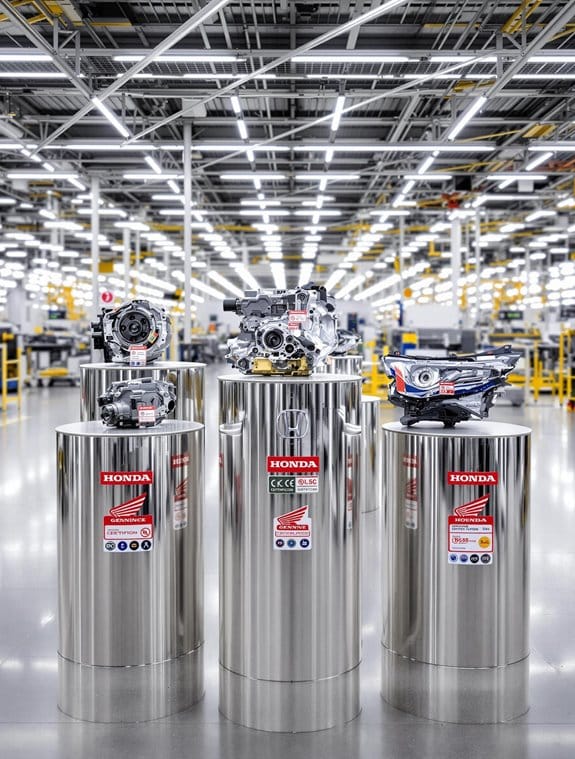
The 5 Best Honda OEM Parts Manufacturers in 2026, Ranked & Verified

Leading Honda OEM parts manufacturers for 2026 include Honda Genuine Parts, Denso Corporation, Aisin Seiki, NGK, and JTEKT Corporation, ranked by quality control standards and factory specifications compliance. You’ll find these manufacturers consistently deliver superior fitment, durability, and performance while maintaining your vehicle’s warranty coverage. When selecting parts, consider installation complexity, long-term reliability, and model-specific compatibility to guarantee ideal results. Exploring each manufacturer’s offerings reveals their unique advantages for your Honda.
Key Takeaways
- Honda Genuine Parts remains the top manufacturer, providing factory-original components with guaranteed fitment and full warranty coverage.
- Denso Corporation ranks second, specializing in electrical components and engine management systems with OEM-grade quality standards.
- Aisin Seiki takes third place, producing reliable transmission parts and cooling system components that meet Honda’s specifications.
- NGK leads fourth in spark plugs and sensors, maintaining strict quality control and extensive compatibility across Honda models.
- Koyo earns fifth position, manufacturing high-durability bearings and steering components matching Honda’s original equipment standards.
Add an Amp Inline Converter for Honda Factory Stereos
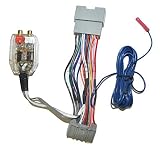
Add an Amp Amplifier Sub Interface Wire Harness Inline Converter Compatible with Select Honda...
- Used to add an amp or sub to your factory system.
- One complete piece, no need to tape wires together.
- Comes with an inline converter.
Automotive enthusiasts seeking to enhance their Honda’s sound system without replacing the factory stereo will find value in the Add an Amp Inline Converter, which offers plug-and-play compatibility across multiple Honda models from 2008-2016.
While installation proves straightforward with its behind-the-head-unit design and built-in line converter, you’ll want to evaluate some performance trade-offs. User experiences highlight mixed results, with some reporting audio distortion and RCA connection issues, while others achieve satisfactory sound enhancement. Before proceeding with installation, you should assess these potential limitations against the convenience of maintaining your factory head unit.
Best For: Honda owners seeking a budget-friendly way to add an amplifier or subwoofer while keeping their factory stereo, particularly those prioritizing simple installation over premium audio quality.
Pros:
- Easy plug-and-play installation without modifying factory wiring
- Wide compatibility across multiple Honda models (2008-2016)
- Cost-effective alternative to replacing the entire head unit
Cons:
- Some users report audio distortion and inconsistent output levels
- Reliability issues with RCA connections
- May not deliver optimal sound quality compared to aftermarket head units
ECOGARD XA6171 Premium Engine Air Filter for Honda Civic & Acura ILX

ECOGARD XA6171 Premium Engine Air Filter | Fits 2012-2015 Honda Civic 1.8L; 2013-2015 Acura ILX 2.0L
- HIGH-CAPACITY PARTICLE FILTRATION – Advanced filter media captures dust, dirt, pollen, and road particles before they enter the engine’s intake system.
- SUPPORTS ENGINE RESPONSE & FUEL EFFICIENCY – Engine air flow management helps support efficient engine operation, contributing to consistent power and performance...
- RECOMMENDED SERVICE INTERVAL – Designed for replacement every 12,000 miles (or as recommended by your vehicle manufacturer) to help maintain optimal engine operation.

The ECOGARD XA6171 Premium Engine Air Filter serves as a direct-fit replacement for Honda Civic (2012-2015) and Acura ILX (2013-2015) models, delivering OEM-quality filtration at a more competitive price point. You’ll find it matches the specifications of several major brands, including FRAM CA11113 and HONDA 17220-R1A-A01, while featuring durable construction with quality materials.
Installation takes just minutes, and you’ll notice immediate performance benefits through improved engine airflow and fuel economy. For peak engine protection, you should replace this filter every 12,000 miles, helping prevent increased engine wear that dirty filters can cause.
Best For: Honda Civic (2012-2015) and Acura ILX (2013-2015) owners looking for a high-quality, cost-effective air filter replacement that matches OEM specifications.
Pros:
- Perfect factory fit and easy installation process taking just minutes
- Provides immediate performance improvements and better fuel economy
- Significantly lower price compared to OEM filters while maintaining same quality
Cons:
- Limited vehicle compatibility (only specific Honda/Acura models and years)
- Requires replacement every 12,000 miles for optimal performance
- May be harder to find compared to more common retail brands like FRAM
Spectre Essentials Engine Air Filter for Honda/Acura Vehicles

Spectre Essentials Engine Air Filter by K&N: Premium Car Air Filter, Lasts Up To 6,000 Miles Longer...
- SEE PRODUCT DESCRIPITON FOR FULL LIST OF COMPATIBLE VEHICLES
- LESS MAINTENANCE: 18,000 mile change interval lasts longer than stock engine air filters at 12,000 miles- our air filters are designed to keep your vehicle on the road...
- 50% LONGER LIFE: High-Capacity filter technology traps more dirt and debris in order to give your engine the clean air it nees to perform optimally for 18,000 miles
Designed specifically for 2012-2015 Honda and Acura vehicle owners who want superior filtration and value, Spectre Essentials Engine Air Filter (SPA-2468) delivers exceptional performance while reducing long-term maintenance costs. You’ll benefit from its extended 18,000-mile change interval, which surpasses stock filters by 6,000 miles.
The filter’s high-capacity technology maintains over 99% efficiency in trapping dirt and debris, ensuring your engine receives clean air throughout its service life. Installation is straightforward, as the filter fits directly into your factory air box without modifications, and you’ll save approximately $50 over your vehicle’s lifetime compared to standard options.
Best For: Honda and Acura owners (2012-2015 models) seeking a high-performance, cost-effective air filter replacement that requires less frequent maintenance.
Pros:
- Extends change interval to 18,000 miles, reducing maintenance frequency
- High-efficiency filtration (over 99%) ensures optimal engine protection
- Easy drop-in installation requires no modifications or special tools
Cons:
- Limited vehicle compatibility (only specific 2012-2015 Honda/Acura models)
- Higher upfront cost compared to standard air filters
- Savings benefits only realized over long-term ownership
Honda 06530-VL0-315ZA Adjuster Kit
Professional mechanics and home repair enthusiasts seeking authentic Honda replacement parts will find exceptional value in Honda’s 06530-VL0-315ZA Adjuster Kit, which serves as a direct OEM replacement for the 06530-VL0-305ZA model.
Compatible with HRR216K6 and HRX217K2 mowers, this grey-handled adjuster kit provides all necessary components for handle bar adjustments, including an upgraded design that prevents accidental part loss during operation. While installation is generally straightforward with a perfect OEM fit, you’ll want to keep basic tools handy for inserting the pin and making final adjustments, ensuring peak functionality and long-term reliability in your Honda mower repair project.
Best For: Honda mower owners and repair professionals seeking a genuine OEM replacement adjuster kit for HRR216K6 and HRX217K2 models who want reliable, long-lasting handle bar adjustment functionality.
Pros:
- Perfect OEM fit guarantees compatibility and proper functionality
- Complete kit includes all necessary components for handle bar adjustment
- Upgraded design prevents accidental part loss during operation
Cons:
- Pin installation may require additional tools and effort
- Higher price point compared to non-OEM alternatives
- Limited compatibility to specific Honda mower models
RED WOLF Car Radio Stereo USB Port Retention Harness Adapter

RED WOLF USB Port Retention Wire Cable for 2013-2017 Toyota Tacoma Corolla, Subaru...
- Compatible with Toyota: For 2013 Corolla S, 2016-2018 Corolla IM, 2013-2017 Corolla, 2019 Tundra, 2013-2017 Tacoma, 2012-2018 RAV4/RAV4 Base, 2018 RAV4 XLE...
- Fitment List: For Subaru 2014-2015 Forester 2.5i, 2015 Subaru Forester XT Premium, 2014-2017 Forester, 2015 WRX Premium, 2012-2015 WRX W/O Navigation, 2013 STi...
- Replacement for Honda / Acura / Mazda: For Honda 2015-2018 Civic, 2017 Civic lx, 2017-2018 Civic Hatchback Sport, 2016 2018 Civic LX, 2018 Honda Civic Sport, 2018 Civic...
Upgrading your car’s stereo system becomes seamless with RED WOLF’s Car Radio Stereo USB Port Retention Harness Adapter, a versatile solution compatible with multiple vehicle brands including Honda, Toyota, Lexus, and Subaru. The plug-and-play adapter lets you retain your factory USB port functionality when installing an aftermarket head unit, enabling device charging without complex modifications.
You’ll appreciate this adapter’s straightforward installation process, though you should verify your specific vehicle configuration first, as compatibility can vary between models with different audio systems. While it’s proven effective for many vehicles, including the 2013 Corolla and Tacoma, some users report limitations with CarPlay or Android Auto functionality.
Best For: Car owners looking to retain their factory USB port functionality while upgrading to an aftermarket stereo system, particularly those with Toyota, Honda, Lexus, or Subaru vehicles from 2012-2019.
Pros:
- Simple plug-and-play installation with no wire cutting or splicing required
- Broad compatibility across multiple popular vehicle brands and models
- Maintains original USB charging functionality with aftermarket head units
Cons:
- Compatibility issues may arise with specific audio system configurations (like JBL vs non-JBL)
- Limited functionality with CarPlay and Android Auto in some cases
- Short cable length might require additional extension in some installations
Factors to Consider When Choosing Car Parts Factory Honda
When selecting factory Honda parts, you’ll need to carefully weigh OEM versus aftermarket quality while considering the complexity of installation and long-term durability ratings. The compatibility between your specific Honda model and the manufacturer’s components is essential, as even slight variations can affect performance and fit. Your decision should ultimately balance price-to-performance value, factoring in both the upfront costs and the potential longevity of OEM parts compared to aftermarket alternatives.
OEM Vs Aftermarket Quality
The decision between OEM and aftermarket parts for your Honda represents a critical choice that impacts your vehicle’s performance, reliability, and long-term value. When you’re evaluating quality differences, you’ll find that OEM parts offer guaranteed fitment and compliance with Honda’s strict manufacturing standards, while aftermarket options can vary considerably in their construction and reliability.
While aftermarket parts might save you money initially and sometimes offer performance enhancements beyond OEM specifications, you’ll need to weigh potential warranty implications and long-term reliability. OEM parts typically provide better durability and maintain your vehicle’s warranty coverage, though they often come at a premium price. To make the best choice, you’ll want to assess the guaranteed quality of OEM parts against the potential cost savings and performance benefits of aftermarket alternatives.
Installation Complexity Level
Beyond parts quality considerations, installation complexity stands as a determining factor in choosing between Honda OEM and aftermarket components for your vehicle. When evaluating potential parts, you’ll find that complexity levels can range from simple plug-and-play setups to more technically demanding installations requiring specialized tools and expertise.
While many aftermarket components offer direct replacement designs that you can install in minutes, certain parts may demand additional modifications, such as adapting wiring harnesses or making adjustments to achieve proper fitment. You’ll want to assess your technical capabilities and available tools before selecting components, as some installations might require professional assistance. Additionally, it’s essential to verify compatibility with your specific Honda model and year, as installation complications often arise with older vehicles or those with existing modifications.
Long-Term Durability Assessment
Evaluating long-term durability remains essential for Honda owners seeking to maximize their vehicle’s performance and minimize future maintenance costs. When reviewing OEM parts, you’ll want to examine the material composition, focusing on high-grade plastics and rubbers that resist environmental damage and wear.
Look for manufacturers that conduct rigorous testing under extreme conditions, including temperature variations and chemical exposure, as these tests indicate the part’s ability to perform reliably. You should also consider the warranty period offered, as longer coverage often reflects the manufacturer’s confidence in their product’s durability. Additionally, research user experiences and maintenance intervals, paying attention to parts that require less frequent replacements. These factors, combined with documented performance reviews over extended periods, will help you make informed decisions about the longevity of Honda OEM parts.
Price-Performance Value Analysis
Making informed decisions about Honda OEM parts requires careful analysis of price-performance value factors, which directly impact both initial costs and long-term benefits. When you’re evaluating parts, consider how premium options, like high-efficiency air filters, can yield savings of around $50 through extended change intervals and improved performance.
You’ll want to assess installation requirements, as parts that don’t need special tools or modifications can reduce your overall expenses by eliminating labor costs. While premium parts often carry higher upfront prices, their enhanced durability and performance characteristics, such as 99% filtration efficiency, typically justify the investment. Consider change intervals carefully, as parts that last longer, like filters with 18,000-mile intervals versus standard 12,000-mile options, can provide better value despite higher initial costs.
Vehicle Model Compatibility
The process of identifying compatible Honda OEM parts starts with a thorough understanding of your vehicle’s specific model, year, and engine configuration. You’ll need to cross-reference your Honda’s specifications with manufacturer compatibility lists to guarantee proper fitment and functionality.
When selecting parts, you should verify that the components match your vehicle’s generation, as design changes between production years can affect compatibility. It’s crucial to check OEM part numbers against the manufacturer’s database, especially when considering aftermarket alternatives that claim direct replacement capability. Remember to review detailed specifications for your specific Honda model, whether it’s an Accord, Civic, or CR-V, as each vehicle line has unique requirements. This verification process helps prevent installation problems and guarantees peak performance of your new components.
Performance Impact Evaluation
When selecting Honda OEM parts, performance impact serves as a critical factor that requires careful analysis across multiple vehicle systems. You’ll need to evaluate how components like premium air filters, which offer over 99% filtration efficiency, can enhance your engine’s performance compared to standard options that require replacement every 12,000 miles.
For audio system upgrades, consider how amplifiers and inline converters affect sound quality, while paying attention to potential distortion issues and connection quality through RCA ports. When examining performance benefits, you’ll want to focus on compatibility with your vehicle’s factory configuration to avoid installation problems and guarantee peak functionality. Remember that proper maintenance intervals, such as regular air filter changes, directly impact your Honda’s overall performance and fuel economy.
Frequently Asked Questions
How Long Does It Typically Take for Honda OEM Parts to Ship?
You’ll find that Honda OEM parts shipping times can vary dramatically depending on your location and part availability. Typically, you can expect domestic shipping to take 3-7 business days, while international orders might stretch to 10-14 business days. If you’re ordering from an authorized Honda dealer, they’ll often offer expedited shipping options that can get parts to you in 1-3 business days, though you’ll pay premium rates for faster delivery.
Are Honda OEM Parts Covered Under the Vehicle’s Original Warranty?
Honda OEM parts are typically covered under your vehicle’s original warranty when they’re installed by an authorized Honda dealer. If you’re within your warranty period, which is usually 3 years/36,000 miles for new vehicles, you’ll receive coverage for defects in materials and workmanship. However, if you install OEM parts yourself or through an independent shop, they’ll only be covered by Honda’s replacement parts warranty, which is typically 12 months/12,000 miles.
Can I Return Unopened OEM Parts if They Don’t Fit?
While OEM parts are designed for precise fitment, you can typically return unopened items to authorized Honda dealers or parts retailers, though specific policies may vary. You’ll need to provide proof of purchase and guarantee the part remains in its original, sealed packaging. Most dealers offer a 30-day return window, but you should verify the return policy before purchase, as some may charge restocking fees or have stricter timeframes for specialty items.
Do Honda Dealerships Price-Match OEM Parts From Online Retailers?
Many Honda dealerships offer price-matching policies for OEM parts, but you’ll need to check with your local dealer as policies can vary. You’ll typically need to provide proof of the competitor’s current price from an authorized seller, and the part must be identical, new, and in stock. Keep in mind that some dealers may exclude certain online retailers or limit matches to local competitors only.
What’s the Difference Between Honda Genuine Parts and Honda OEM Parts?
Think of Honda Genuine Parts as identical twins born at the factory, while Honda OEM parts are like close cousins from the same family. You’ll find that Honda Genuine Parts are made directly by Honda in their facilities, carrying the official Honda packaging and part numbers. In contrast, Honda OEM parts are manufactured by third-party companies that supply Honda during vehicle production, meeting the same specifications but typically at a lower cost.


