As an Amazon Associate, we earn from qualifying purchases. Some links may be affiliate links at no extra cost to you. Although our opinions are based on curated research, we haven't used these products. Articles generated with AI.


5 Best Automotive Parts Cleaner

The top five automotive parts cleaners offer specialized solutions for different cleaning needs. Simple Green Industrial Cleaner provides an eco-friendly, concentrated formula for general degreasing, while Gumout Carburetor Cleaner excels at removing stubborn grime from metal parts. Berryman B-9 Chem Dip stands out for immersion cleaning of heavily soiled components, and Oil Eater Original delivers professional-grade cleaning power at an economical price point. CRC Quick Clean rounds out the list with its fast-evaporating, NSF-registered formula ideal for sensitive parts. Understanding each cleaner's unique strengths will help you make the most effective choice for your specific automotive cleaning tasks.
Key Takeaways
- Simple Green Industrial Cleaner offers eco-friendly, versatile cleaning with custom dilution options for both manual and pressure washer applications.
- Gumout Carburetor Cleaner effectively removes tough contaminants from metal parts with its quick-drying formula and strong degreasing capabilities.
- Berryman B-9 Chem Dip excels at immersion cleaning with its included parts basket and safe formula for multiple surface types.
- Oil Eater Original provides excellent value with USDA-approved, biodegradable formula that's effective on both automotive and household cleaning tasks.
- CRC Quick Clean features a non-flammable, NSF-registered formula that quickly evaporates and removes contaminants with minimal residue.
SIMPLE GREEN ndustrial Cleaner and Degreaser, 1 US GALLON

SMP13005 - Simple Green Industrial Cleaner and Degreaser
- Industrial strength cleaner, degreaser, and deodorizer removes heavy dirt, grease, food residue and stains from washable surfaces.
- Recognized by the U.S. EPA's Safer Choice Program.
- Cleans counters, carpet, floors, machines, equipment and vehicles.

Simple Green's industrial-grade cleaner and degreaser stands out as a powerhouse solution for automotive professionals and DIY mechanics who need a versatile, eco-friendly product for their cleaning tasks. You'll appreciate its EPA Safer Choice recognition and concentrated formula, which you can dilute according to your specific cleaning requirements.
The cleaner excels at removing stubborn grease, grime, and oil from automotive parts, while its biodegradable formula guarantees you're working with an environmentally responsible product. You can apply it using various methods, from manual cleaning to professional equipment like pressure washers and steam extractors, making it adaptable to your workspace needs. When you're tackling tough automotive cleaning jobs, you'll find this cleaner's pleasant scent and non-toxic nature particularly appealing, especially compared to traditional harsh chemical cleaners.
Best For: Professional mechanics, automotive workshops, and DIY enthusiasts seeking a versatile, eco-friendly cleaner that effectively tackles tough grease and grime while being safe for various surfaces.
Pros:
- Highly concentrated formula allows custom dilution for different cleaning tasks, providing excellent value for money
- EPA Safer Choice certified, biodegradable, and non-toxic formula makes it environmentally responsible and safer for users
- Versatile application methods including manual cleaning, pressure washers, and professional equipment
Cons:
- Packaging design could use improvement according to some users
- Child-safe cap design may be difficult for some adults to open
- Initial cost might seem high compared to ready-to-use cleaners (though offset by concentration capability)
Gumout Carburetor and Choke Parts Cleaner (14 oz.)

Gumout 800002231 Carb/Choke Carburetor Cleaner Spray, Carb Intake Valve Cleaner, Cleans Gum, Varnish...
- Helps Overcome Hard Starting, Rough Idling, Stalling, And High Exhaust Emissions
- Quickly Removes Deposits From The Inside And Outside Of The Carburetor To Improve Engine Performance And Fuel Economy
- Cleans Gum, Varnish, And Dirt From Clogged Carburetors And Choke Valves
Professional mechanics and DIY enthusiasts trust Gumout's Carburetor and Choke Parts Cleaner for its powerful cleaning action on carburetors, brakes, and unpainted metal components. You'll find this 14-ounce cleaner effectively removes gum, varnish, oil, and contaminants that cause hard starting, rough idling, and high emissions.
The versatile formula works beyond its primary carburetor-cleaning purpose, tackling tasks like degreasing metal surfaces, cleaning electrical contacts, and removing adhesive residues. When you're using this top-rated cleaner, you'll need proper ventilation due to its strong fumes, and you should avoid applying it to painted surfaces or sensitive plastics. The quick-drying American-made formula has earned its #1 position in carburetor cleaners through consistent performance and reliability.
Best For: Professional mechanics and DIY auto enthusiasts who need a powerful, versatile cleaner for carburetors, metal parts, and other automotive components requiring thorough degreasing and deposit removal.
Pros:
- Highly effective at removing stubborn deposits, gum, varnish, and oil from carburetors and metal parts
- Versatile applications beyond automotive use, including electrical contacts, adhesive removal, and general degreasing
- Quick-drying formula with proven track record reflected in high customer ratings
Cons:
- Strong fumes require proper ventilation during use
- Can damage painted surfaces and sensitive plastics
- Limited to metal and durable surfaces only, restricting its use on more delicate materials
Berryman B-9 Chem Dip Parts Cleaner (0996-ARM)

Berryman 0996-ARM B-9 Chem Dip Parts Cleaner with Basket and Armlock, 3/4-Gallon Pail
- Fast-acting immersion cleaner
- Effective on gum, varnish, sludge, hard carbon, oil, and grease
- Safe for use on plastic, rubber, and most painted components
Mechanics and DIY enthusiasts seeking a powerful immersion cleaner will find the Berryman B-9 Chem Dip Parts Cleaner ideal for restoring grimy automotive components. This 3/4-gallon solution effectively removes gum, varnish, sludge, hard carbon, oil, and grease while remaining safe for plastic, rubber, and most painted surfaces.
You'll appreciate the included parts basket that simplifies the cleaning process, allowing you to submerge components overnight for thorough restoration. The formula's proven effectiveness on carburetors up to 62 years old demonstrates its robust cleaning capabilities, while its VOC-compliant status guarantees legal use across all 50 states. Whether you're tackling a snowblower carburetor or complex automotive parts, this versatile cleaner delivers consistent results, bringing components back to like-new condition after just a few hours of soaking.
Best For: DIY mechanics and automotive enthusiasts who need a powerful immersion cleaner for restoring carburetors and other metal parts contaminated with tough deposits like varnish, carbon, and grease.
Pros:
- Highly effective at removing stubborn deposits from carburetors and metal parts, even on decades-old components
- Includes a convenient parts basket for easy submersion and retrieval of components
- Safe for multiple materials including plastics, rubber, and painted surfaces while being VOC compliant nationwide
Cons:
- Some users report issues with shipping damage to the container
- 3/4-gallon size may be limiting for cleaning larger components
- Requires patience as complete cleaning may take several hours or overnight soaking
Oil Eater Original Gallon Cleaner & Degreaser (Professional Strength)
Sale

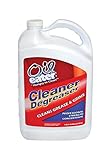
Oil Eater Original 1 Gallon Cleaner, Degreaser - Dissolve Grease Oil and Heavy-Duty Stains...
- Powerful Cleaning: Dissolves Grease, Oil And Dirt From Any Washable Surface
- Usda Approved: For Use At Food Service Facilities (A1, A4, A8)
- Biodegradable Formula: No Harsh Solvents And Is Noncorrosive
Hardworking DIY enthusiasts and auto shop owners will appreciate Oil Eater's Original Gallon Cleaner & Degreaser, a USDA-approved solution that dissolves stubborn grease and grime without harsh solvents. You'll find this biodegradable, non-corrosive formula effectively cleans multiple surfaces, from automotive parts to tools, with a concentrated strength that can be diluted based on your needs.
For best results, you'll want to apply the concentrated formula directly to the surface, allow it to sit briefly, and then rinse thoroughly with water. While the gallon container's dilution instructions aren't extensive, you can create effective cleaning solutions by mixing 3 parts water to 1 part Oil Eater for most applications. At roughly $20 per gallon, this cleaner offers excellent value, especially when you consider its professional-grade cleaning power and versatility across various automotive cleaning tasks.
Best For: Professional mechanics, auto enthusiasts, and DIY homeowners looking for a powerful, versatile degreaser that can handle tough automotive and household cleaning tasks while being environmentally conscious.
Pros:
- Highly concentrated formula offers excellent value and can be diluted for various cleaning needs
- Biodegradable and non-corrosive formula works effectively without harsh solvents
- Versatile cleaner that tackles multiple surfaces from automotive parts to household areas
Cons:
- Limited dilution instructions on the gallon container may cause confusion
- Protective gloves recommended during use due to strong chemical formulation
- May require multiple applications for extremely stubborn or old stains
CRC Quick Clean Safety Solvent and Degreaser (03180)

CRC Quick Clean Safety Solvent And Degreaser 03180 – 19 WT OZ, Clear, Aerosol Cleaner - Industrial...
- CRC INDUSTRIES- A market leader that offers impeccably designed chemical solutions to maintain, protect and repair different marine, heavy-duty motor vehicles...
- GENERAL PURPOSE DEGREASER- Quick Clean Safety Solvent and Degreaser effectively removes contaminants, oil, grime, sludge, grease, and tar from industrial and electrical...
- FORMULA- The Quick Clean Degreaser has a chlorinated base with fast evaporating action. The non-flammable, VOC exempt formula leaves no residue and contains no Class I or...
Anyone seeking a powerful, non-flammable degreaser will find CRC Quick Clean Safety Solvent and Degreaser (03180) an essential tool for their maintenance arsenal. This NSF K1 registered aerosol cleaner efficiently removes oil, grease, and grime from various mechanical components while leaving minimal residue behind.
You'll appreciate this degreaser's versatility across multiple applications, from cleaning motors and air tools to maintaining brakes and clutches. The fast-evaporating, chlorinated formula is VOC-exempt and environmentally conscious, containing no Class I or Class II ozone-depleting chemicals. When you're working on engines, generators, pumps, or preparing surfaces for painting, this 19-ounce aerosol cleaner delivers consistent, professional-grade results. It's particularly effective for precision cleaning tasks where quick evaporation and residue-free results are vital.
Best For: Professional mechanics and maintenance technicians who need a powerful, non-flammable degreaser for heavy-duty cleaning of mechanical parts, engines, and industrial equipment.
Pros:
- Fast-evaporating formula leaves minimal residue, making it ideal for precision cleaning tasks
- NSF K1 registered and VOC-exempt, meeting professional safety and environmental standards
- Versatile application across multiple surfaces and components, from motors to bearings
Cons:
- May not be suitable for surfaces that will be painted, as some users reported adhesion issues
- Chlorinated formula requires proper ventilation during use
- Higher price point compared to standard degreasers
Factors to Consider When Choosing an Automotive Parts Cleaner

When selecting an automotive parts cleaner, you'll need to evaluate multiple key factors that impact its effectiveness and suitability for your specific cleaning needs. These factors include the application method and required tools, safety considerations and environmental impact, material compatibility with different surfaces, cleaning strength relative to cost, and necessary drying time for your workflow. Your choice should align with your cleaning requirements while considering workplace safety regulations, available equipment, and the types of contaminants you'll be removing from automotive parts.
Application Method and Tools
The application method and tools you choose for automotive parts cleaning can greatly impact the effectiveness of your maintenance routine. You'll need to match your cleaner's formulation with the appropriate application technique, whether that's manual scrubbing, spray application, or immersion cleaning.
When selecting your cleaning approach, consider whether you'll be using professional equipment like pressure washers or steam extractors, as some cleaners are specifically designed to work with these tools for enhanced performance. You'll want to verify your chosen cleaner's formulation is compatible with your equipment and provides consistent results through proper dilution ratios.
The surface material of your automotive parts should guide your tool selection, as different materials may require specific application methods for safe and effective cleaning. For instance, delicate plastic components might need gentle manual cleaning, while sturdy metal parts could withstand pressure washing. Additionally, consider the drying time associated with your chosen method, as quick-drying solutions can help streamline your cleaning process and minimize downtime. Always follow the manufacturer's instructions for proper application techniques to achieve the best cleaning results.
Safety and Environmental Impact
Selecting environmentally responsible automotive parts cleaners has become vital for both workplace safety and ecological preservation. When you're choosing a parts cleaner, you'll want to prioritize products that are biodegradable and free from harsh solvents, which helps protect local ecosystems and waterways from contamination.
Look for cleaners that meet VOC compliance standards, as these regulations guarantee reduced emissions of volatile organic compounds that can affect air quality and worker health. You'll also want to verify that your chosen product carries appropriate safety certifications, such as NSF registration, which confirms adherence to established environmental and safety protocols. It's essential to avoid products containing ozone-depleting substances, as these chemicals contribute to atmospheric damage and climate change.
Before making your final selection, review the product's disposal requirements carefully. Some cleaners may require specialized handling or recycling procedures to prevent environmental contamination after use. By considering these environmental factors, you're not only protecting your workspace but also contributing to broader environmental conservation efforts while maintaining effective cleaning performance for your automotive parts.
Surface Material Compatibility
Carefully matching your parts cleaner to specific surface materials stands as a critical decision in automotive maintenance. Before applying any cleaning solution, you'll need to verify its compatibility with the components you're planning to clean, as using the wrong product can lead to permanent damage.
When selecting a parts cleaner, first identify the materials you'll be working with, whether they're unpainted metal, plastic components, rubber seals, or painted surfaces. Many cleaners are specifically formulated for bare metal parts but can harm more sensitive materials through chemical reactions. You'll want to thoroughly review the manufacturer's specifications and material compatibility guidelines before making your selection.
If you're unsure about a cleaner's effects on a particular surface, it is crucial to perform a spot test in an inconspicuous area first. Pay special attention to solvent-based cleaners, which can be particularly aggressive on certain materials like plastics or rubber components. You'll find that some all-purpose cleaners are designed to be safe across multiple surface types, but don't assume universal compatibility without verifying the product specifications.
Cleaning Power Vs Price
While searching for the ideal automotive parts cleaner, you'll quickly discover that higher price tags don't always guarantee superior cleaning power. However, premium cleaners often justify their cost through concentrated formulas that effectively tackle stubborn grease, oil, and carbon deposits, which directly impact your engine's performance.
When evaluating cleaners at different price points, you'll want to weigh their dilution capabilities, as higher-end products typically allow you to adjust the strength for various cleaning tasks. This flexibility can make a more expensive cleaner more economical in the long run, as you're able to customize the solution based on the level of contamination you're dealing with. While budget-friendly options might seem attractive initially, they often require more frequent applications or additional products to achieve the same results as their premium counterparts. Your best strategy is to focus on cleaners with proven performance ratings, even if they come with a higher upfront cost. The investment in a quality cleaner will likely pay off through improved maintenance efficiency and extended parts life, saving you both time and money over the long term.
Drying Time Requirements
Understanding drying time requirements is vital when choosing an automotive parts cleaner, as it directly impacts your maintenance workflow and efficiency. You'll find that drying times can vary dramatically between different cleaner types, with aerosol sprays offering near-instant evaporation while immersion cleaners may require several hours for complete drying.
When selecting your cleaner, you'll need to take into account how the application method affects drying performance. Spray cleaners typically provide faster drying due to their fine mist application, which creates a thin layer that evaporates quickly. If you're using immersion cleaners, you'll want to factor in additional time for the parts to dry completely after soaking. Environmental conditions will also influence your drying times, so you'll need to account for temperature and humidity levels in your workspace. For maximum efficiency, look for cleaners that evaporate without leaving residue, as this eliminates the need for secondary cleaning steps. If rapid turnaround is vital for your operations, you'll benefit most from quick-drying formulations that allow you to resume assembly work promptly after cleaning.
Dilution and Concentration Options
Selecting the right dilution ratio for your automotive parts cleaner can make the difference between effective cleaning and subpar results. When working with concentrated cleaners, you'll need to understand how different dilution levels affect cleaning performance and cost efficiency. A common ratio of 3:1 works well for heavy-duty cleaning tasks, striking an ideal balance between cleaning power and surface protection.
You'll find that concentrated formulas offer significant cost advantages, as you can mix smaller amounts to create larger volumes of cleaning solution. Many professional-grade cleaners allow you to adjust the concentration based on your specific needs, from light maintenance work to intensive degreasing projects. For example, you might use a stronger mixture for removing baked-on grease from engine components, while a more diluted solution works better for routine parts cleaning.
Before mixing any solution, you should always consult the manufacturer's guidelines for proper dilution ratios. Following these specifications helps guarantee you're getting the most effective cleaning action while protecting sensitive automotive components from potential damage due to overly concentrated solutions.
Storage and Shelf Life
To maximize the effectiveness of your automotive parts cleaner, proper storage and shelf life management are essential considerations. Most automotive cleaners maintain their potency for one to three years when stored correctly, though this duration can vary based on the specific formulation and storage conditions you provide.
You'll want to store your cleaner in a cool, dry location that's protected from direct sunlight, as exposure to UV rays and extreme temperatures can compromise the chemical stability of the solution. When you're handling the cleaner, make sure to tightly seal the container after each use to prevent evaporation and contamination, which can greatly reduce its cleaning power over time.
Before using your cleaner, you should always check the manufacturer's label for specific storage requirements and expiration dates, as different formulations may have unique temperature sensitivities or storage needs. If you're unsure about your cleaner's effectiveness, look for signs of separation, discoloration, or unusual odors that might indicate degradation. By following these storage guidelines, you'll help guarantee your automotive parts cleaner maintains its ideal performance throughout its intended shelf life.
Frequently Asked Questions
How Long Can Automotive Parts Cleaners Be Stored Before They Expire?
Most automotive parts cleaners remain effective for 2-3 years when stored properly in their original sealed containers, but you'll need to check the specific expiration date on your product's label. You'll want to keep them in a cool, dry place away from direct sunlight and extreme temperatures to maximize shelf life. After opening, you should use the cleaner within 6-12 months for best performance and cleaning effectiveness.
Can These Cleaners Be Used on Motorcycle or Boat Parts?
Like a universal key that opens many locks, automotive parts cleaners can indeed be used effectively on motorcycle and boat parts. You'll find these cleaners work well across various engine components, as they're formulated to break down grease, oil, and carbon deposits common to all internal combustion engines. However, you should always check the product label for specific material compatibility, especially with marine applications where corrosion resistance is essential.
Are These Products Safe to Use on Painted Surfaces?
Most automotive parts cleaners aren't safe for painted surfaces, as their strong solvents can damage or strip paint. You'll want to use specific products labeled as "paint-safe" or opt for gentler alternatives like automotive soap or specialized paint cleaners. If you must clean near painted areas, protect them with masking tape and plastic sheeting, and always test the cleaner on a small, inconspicuous area first to guarantee compatibility.
What Protective Equipment Is Recommended When Using Automotive Parts Cleaners?
You might think a quick wipe with bare hands is fine, but you'll want proper protection when handling automotive cleaners. You'll need chemical-resistant gloves, safety goggles to shield your eyes from splashes, and a respirator mask to avoid inhaling harmful fumes. It's also essential to wear long sleeves, long pants, and closed-toe shoes. Working in a well-ventilated area or outdoors will provide additional protection from concentrated vapors.
Can These Cleaners Damage Rubber Seals or Plastic Components?
Yes, aggressive parts cleaners can damage rubber seals and plastic components if you're not careful in your selection. Solvent-based cleaners often cause rubber to swell, crack, or deteriorate, while harsh chemicals can make plastics brittle or discolor them. You'll want to use water-based or specialized rubber-safe cleaners when working near seals, gaskets, or plastic parts. Always check the product's compatibility guidelines and test on a small area first.


